They say abs are made in the kitchen, but I think habits are made in the grocery store. If you have nourishing food readily available, you'll eat it. If you have nothing but ingredients that take two hours to cook... well, that's when the delivery app opens.
This grocery list is designed to accompany our 4-Week Meal Plan, but it stands on its own as a master list for an 80/20 lifestyle. Categorized by aisle to save you from running back and forth like you're doing a cardio workout (save that for your 45 minutes of movement!).
Shopping Strategy 101
Before you head out, do a quick "pantry shop"—check what you already have. There is nothing worse than buying a third jar of cumin when you really needed cinnamon.
The Perimeter Rule
Generally, the freshest, whole foods live on the perimeter of the store (produce, meat, dairy). The aisles are where the processed stuff lives. Aim to fill 80% of your cart from the perimeter.
Produce: Fresh & Frozen
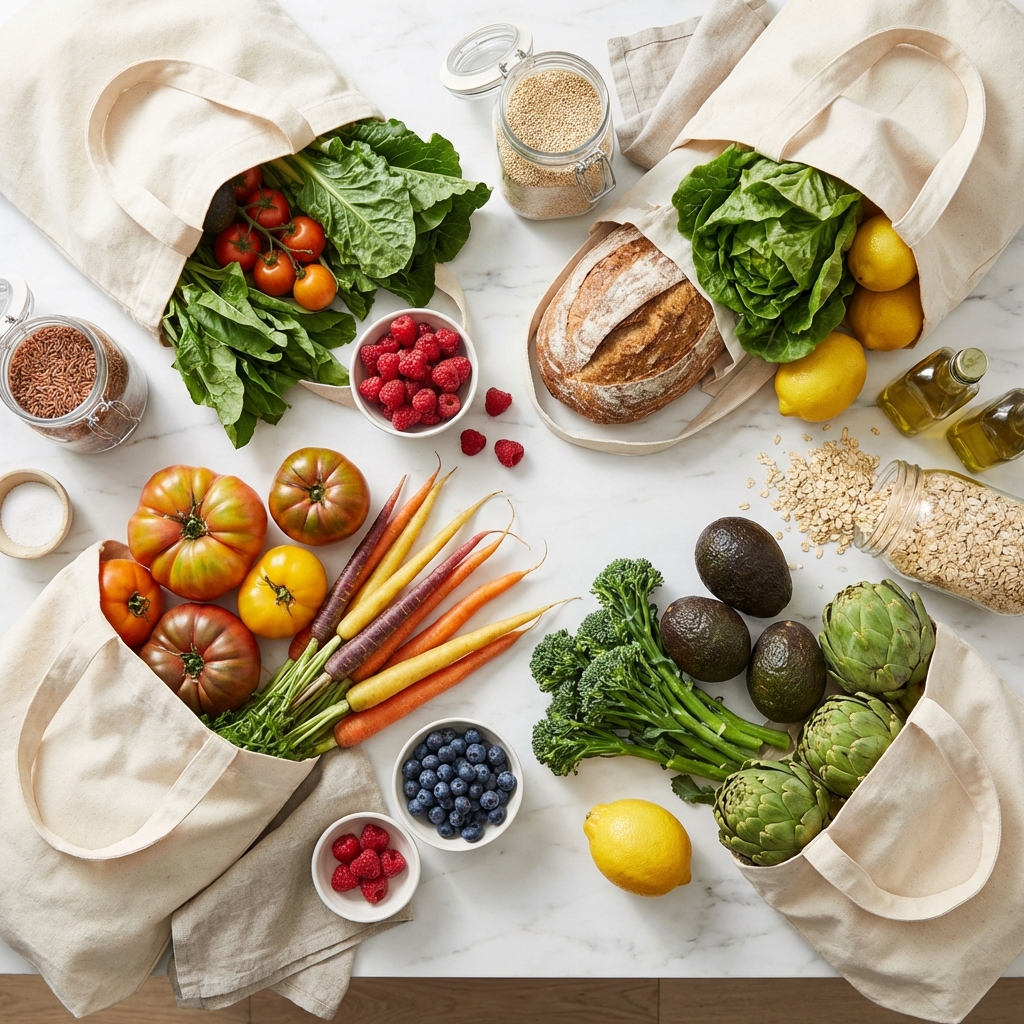
This should be the bulk of your cart. Pick a mix of longer-lasting items (apples, carrots) and things to eat first (berries, spinach).
Greens & Veggies
- Spinach / Mixed Greens (big tub)
- Broccoli / Cauliflower
- Bell Peppers (multi-color)
- Carrots (baby or whole)
- Onions (Yellow and Red)
- Sweet Potatoes / Yams
- Zucchini
- Cucumber
- Garlic (fresh)
- Tomatoes (Cherry and larger)
- Frozen Stir-Fry Veggie Mix
Fruits
- Bananas
- Berries (fresh or frozen)
- Apples / Pears
- Lemons / Limes (for water & dressing)
- Avocados
Proteins: Meat & Plant-Based
Protein keeps you full and supports muscle recovery from your workouts.
Meat & Fish
- Chicken Breasts or Thighs
- Ground Turkey or Lean Beef
- Salmon Fillets (fresh or frozen)
- Canned Tuna
Plant-Based & Dairy
- Eggs (large carton)
- Greek Yogurt (plain)
- Cottage Cheese
- Canned Beans (Black, Garbanzo)
- Lentils
- Tofu or Tempeh
Pantry Essentials
These are the flavor-makers and base layers that make meals come together.
- Olive Oil (Extra Virgin)
- Balsamic or Apple Cider Vinegar
- Quinoa / Brown Rice
- Oats (Rolled or Steel Cut)
- Nut Butter (Almond or Peanut)
- Pasta Sauce (Marina, low sugar)
- Whole Grain Pasta or Chickpea Pasta
- Soy Sauce or Tamari
- Honey or Maple Syrup
- Chicken or Vegetable Broth
- Spices: Salt, Pepper, Garlic Powder, Italian Mix, Chili Powder
Smart Snacks
Because hunger happens. Be prepared.
- Nuts: Almonds, walnuts, pistachios (unsalted is best).
- Hummus: Great for dipping carrots.
- Dark Chocolate: For those 20% moments.
- Rice Cakes: A crunchy vehicle for nut butter.
Budget-Friendly Tips
Eating healthy doesn't have to break the bank. Here is how I keep costs down:
- Buy Frozen: Frozen berries and veggies are just as nutritious as fresh, cheaper, and they don't spoil.
- Bulk Bins: Buy oats, rice, quinoa, and nuts from the bulk section. You pay for the food, not the marketing packaging.
- Meatless Mondays: Beans and lentils are pennies per serving compared to meat.
- Store Brands: The generic organic brand is usually the exact same product as the name brand.