The right tracking system can make or break your 75 Soft experience. Too complex, and you'll abandon it by week two. Too simple, and you'll lose sight of your progress. The sweet spot is a method that takes seconds to complete but provides the accountability you need.
I've tried everything—elaborate spreadsheets, fancy apps, sticky notes on my mirror. What works best is whatever you'll actually use. For me, that turned out to be a simple paper tracker where I could check off four boxes each day. Nothing fancy. Just a visual reminder that I'm showing up.
Why Tracking Matters
Tracking serves multiple psychological functions that support habit formation:
- Accountability: Writing down (or checking off) a behavior makes it real. You're less likely to skip when you know you'll have to face an empty checkbox.
- Visual progress: Seeing a streak of completed days builds momentum. You don't want to break the chain.
- Pattern recognition: Looking back at your tracking can reveal patterns—when you struggle, what helps, what doesn't.
- Celebration: Completing 75 days of checkmarks is deeply satisfying. It's proof that you showed up.
What gets measured gets managed. But keep the measurement simple enough that you actually do it.
Simple Tracking Methods
The Four-Box Method
The simplest approach: draw four boxes for each day, one for each habit. Check them off as you complete them. That's it. No ratings, no notes, no complexity.
- ☐ 45 min exercise
- ☐ Healthy eating
- ☐ 10 pages reading
- ☐ 3L water
Calendar Method
Use a printed monthly calendar. Each day you complete all four habits, draw an X or place a sticker. The goal is an unbroken chain of X's. (But remember—one missed day doesn't erase your progress.)
Bullet Journal Spread
If you're already a bullet journal user, create a dedicated 75 Soft spread with daily tracking, weekly reflections, and space for notes.

Recommended Apps
If digital tracking suits you better, here are apps that work well for 75 Soft:
Habit (iOS/Android)
Clean, simple habit tracking with streak counting and reminders. Free version covers most needs.
Streaks (iOS)
Apple Design Award winner with beautiful interface. Perfect for tracking exactly four habits. One-time purchase.
Habitica (iOS/Android)
Gamified habit tracking that turns your habits into a role-playing game. Fun if you enjoy that kind of motivation.
Notion
If you're already in the Notion ecosystem, there are many free 75 Soft templates available. Good for those who want journaling alongside tracking.
One Tool Only
Pick one method and commit to it for the full 75 days. Switching between systems mid-challenge creates friction and reduces adherence. Simple and consistent beats complex and abandoned.
Printable Trackers
Many people find paper tracking more satisfying than digital. There's something powerful about physically checking a box with a pen. Here are resources for printable 75 Soft trackers:
- Pinterest: Search "75 Soft printable tracker" for dozens of free options
- Etsy: More designed options, usually $1-5 for printable PDF bundles
- Canva: Create your own using their free templates
A simple tracker should include: space for all 75 days, the four daily habits, and optionally a space for daily notes or weekly reflections.
Journaling for 75 Soft
While not officially part of 75 Soft, many practitioners add journaling to deepen their experience. Journaling provides:
- Emotional processing: A place to work through the feelings that arise during the challenge
- Pattern recognition: Written reflections reveal what helps and hinders your progress
- Memory: You'll want to remember this journey—journals capture the details you'll forget
- Growth documentation: Reading back through your journal shows how far you've come

Simple Journal Prompts
- How did I feel today?
- What was challenging? What was easy?
- What am I learning about myself?
- What do I want to remember about today?
- What am I grateful for?
Avoiding Obsessive Tracking
A word of caution: tracking should support your journey, not dominate it. If you find yourself anxious about perfect tracking, spending more time logging than doing, or feeling like a failure over incomplete logs—step back.
Signs you're overtracking:
- Tracking takes more than 2 minutes daily
- You feel anxious about missing entries
- You track more details than the four core habits
- Tracking feels like a chore rather than support
Permission to Simplify
If tracking starts causing stress, simplify radically. A mental check-in is better than an elaborate system you resent. Some people do 75 Soft with no tracking at all—just daily intention and honest self-assessment.
In This Section
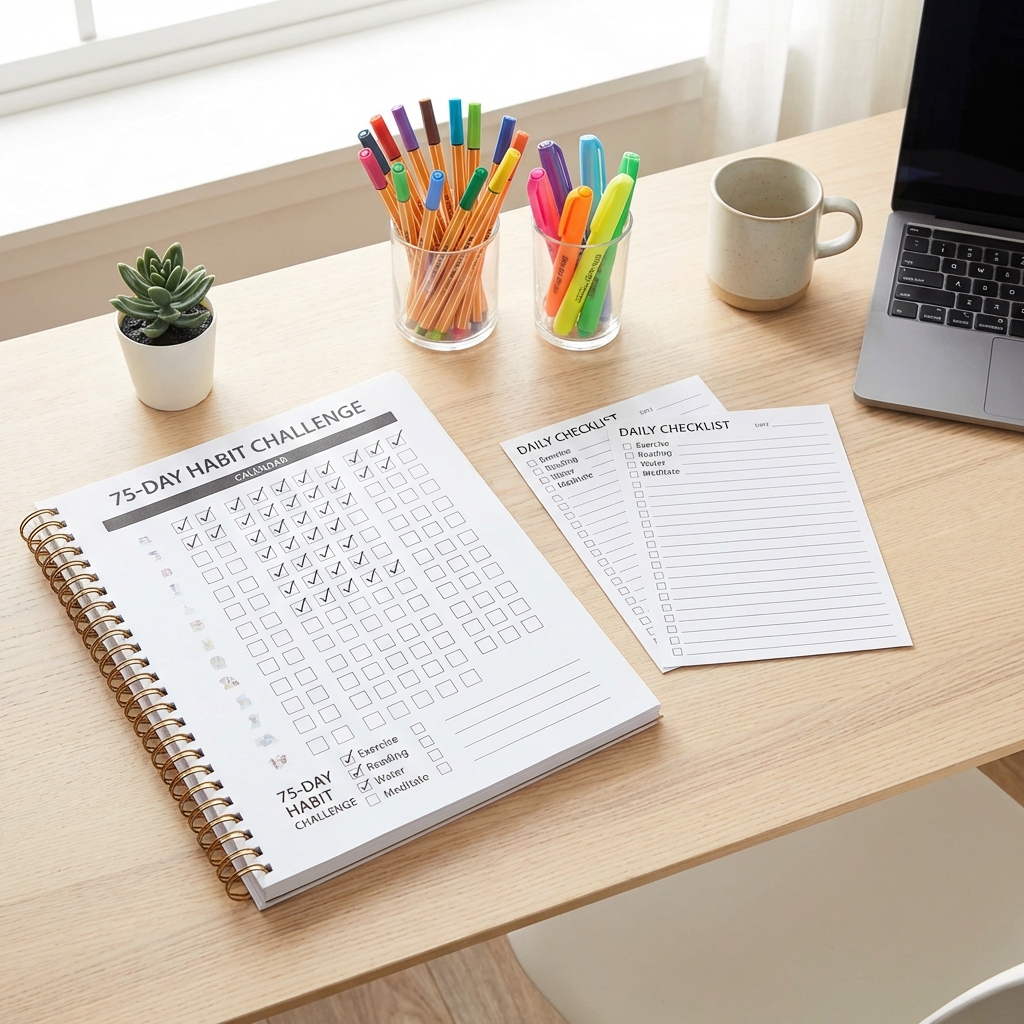
Printable Calendar & Checklists
Free 75-day calendar, daily checklists, and tracking sheets.
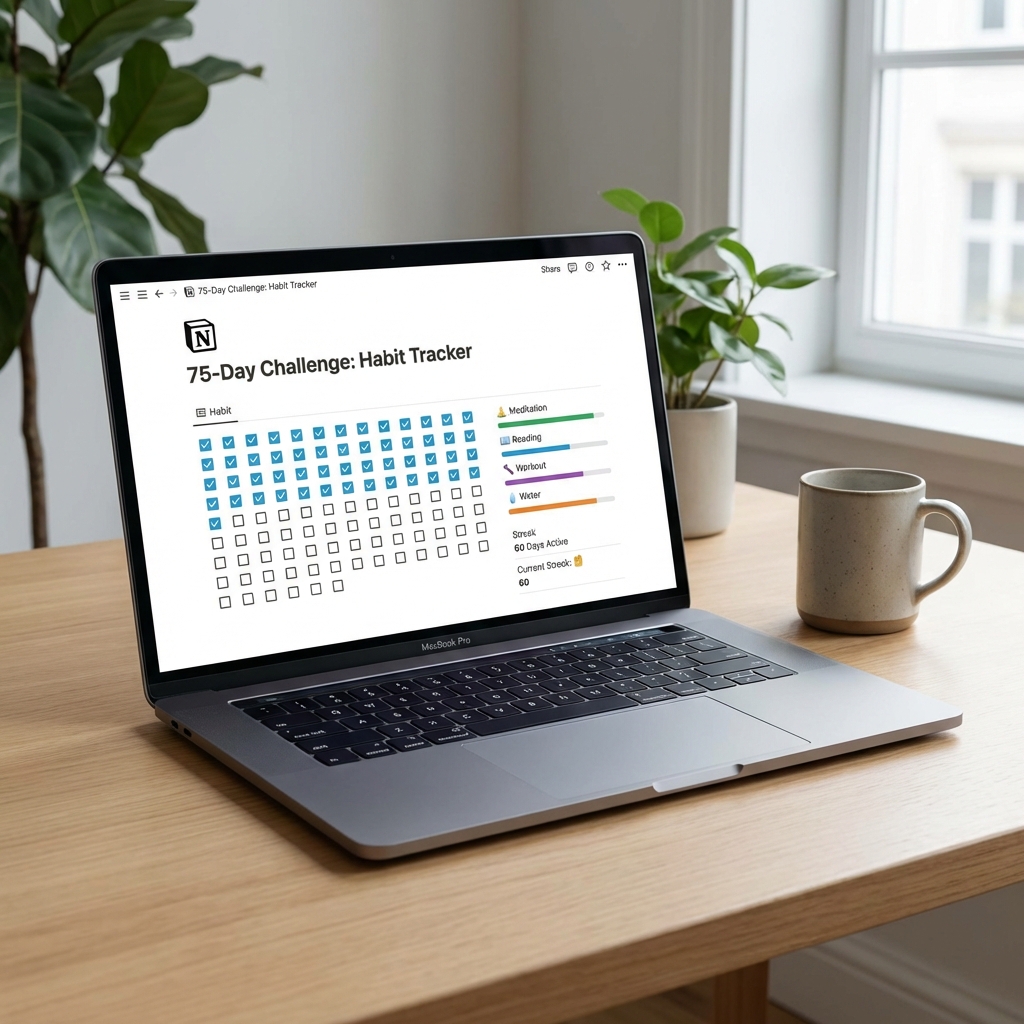
Notion Template
Digital dashboard to track all four habits in Notion.
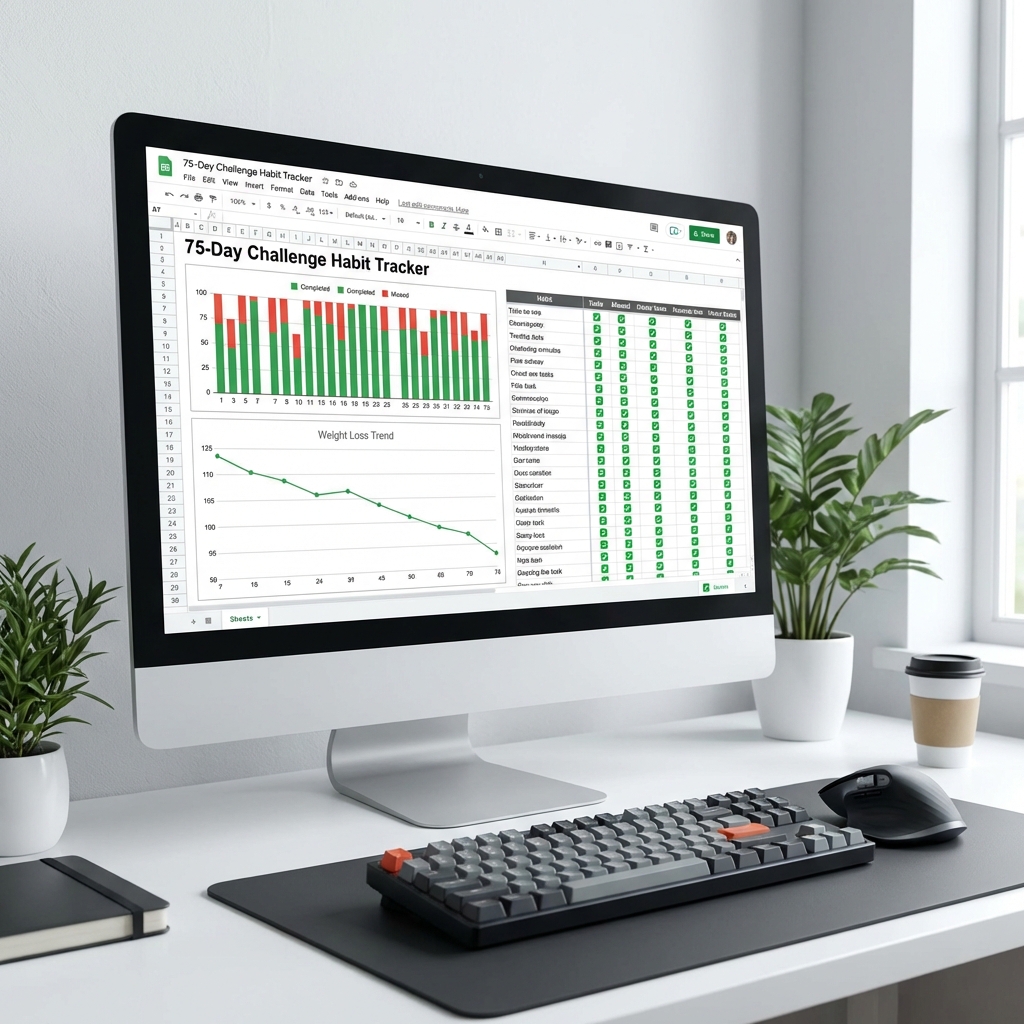
Google Sheets Tracker
Spreadsheet tracker with progress charts and habit scoring.
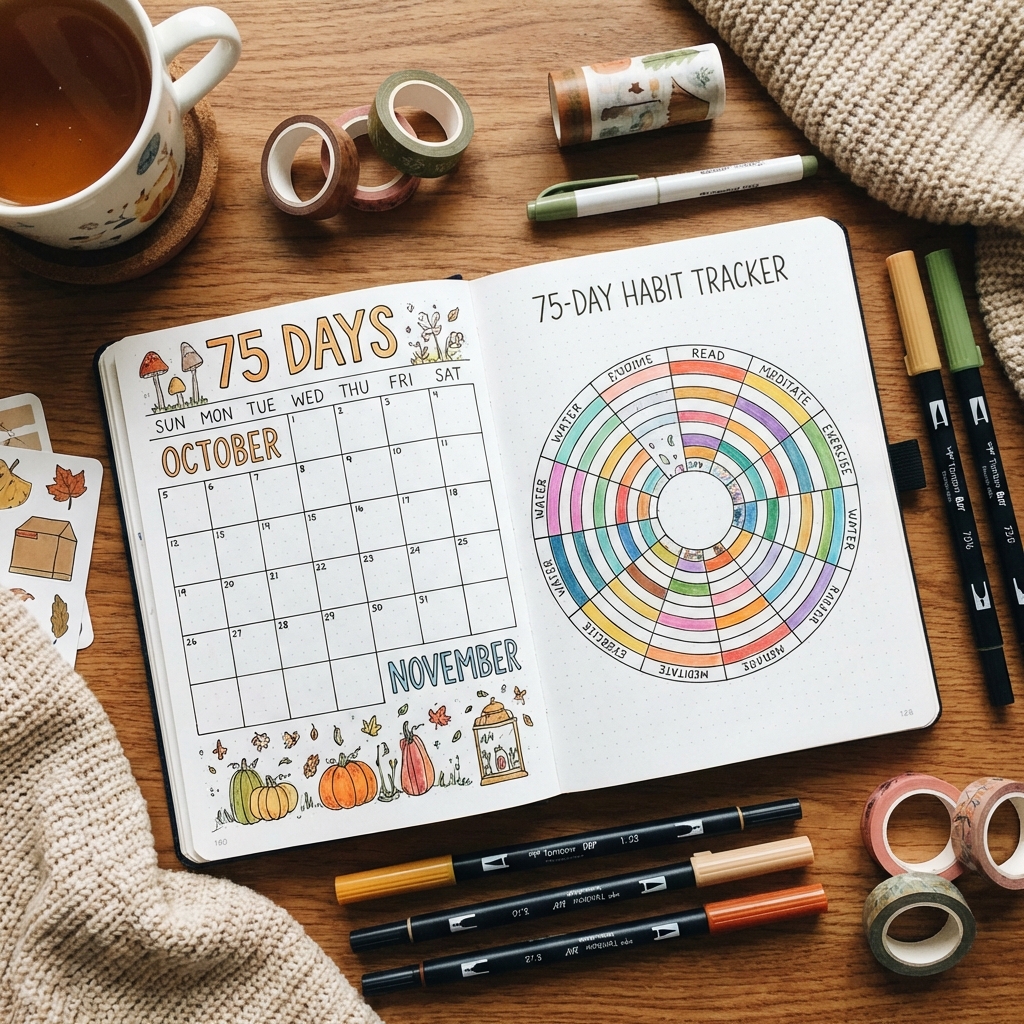
Bullet Journal Layout Ideas
Creative BuJo spreads for pen-and-paper lovers.
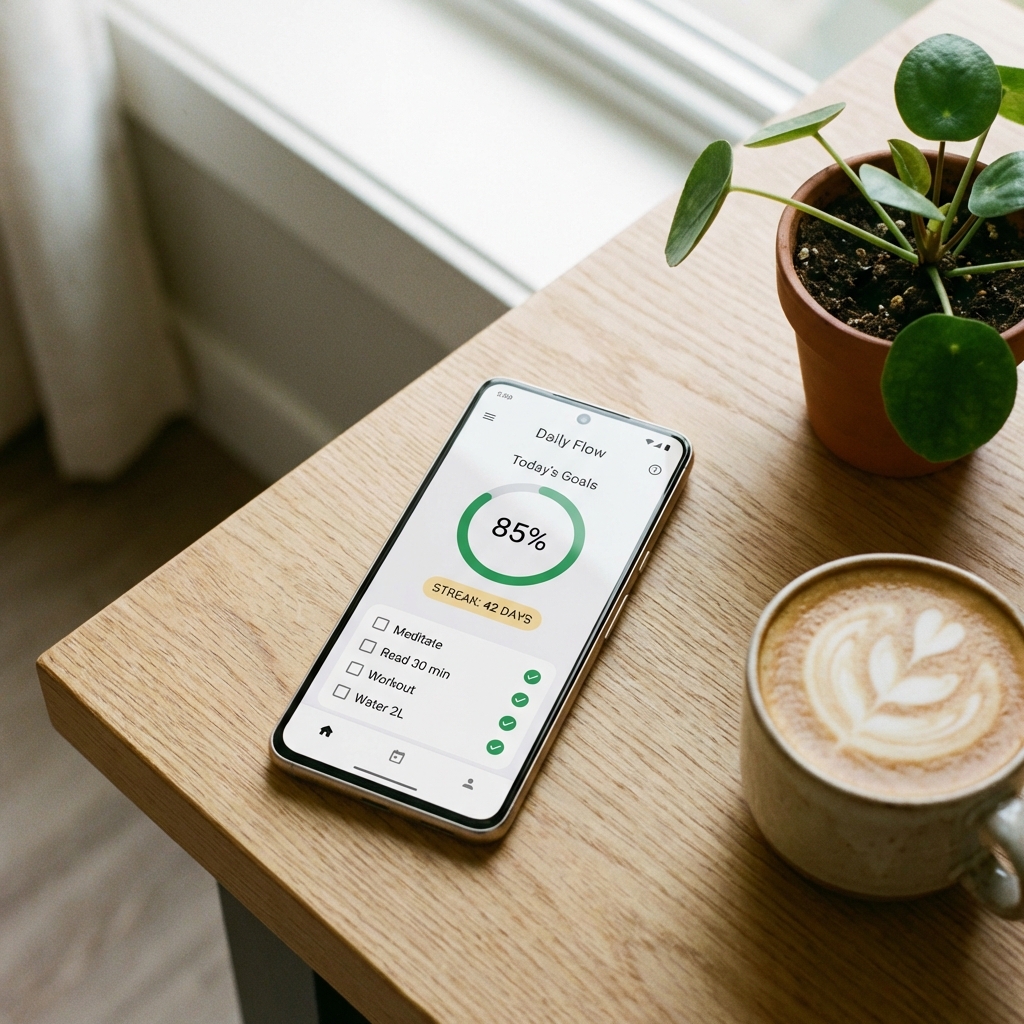
Best 75 Soft Apps
Compare iOS and Android apps—and when you don't need one.