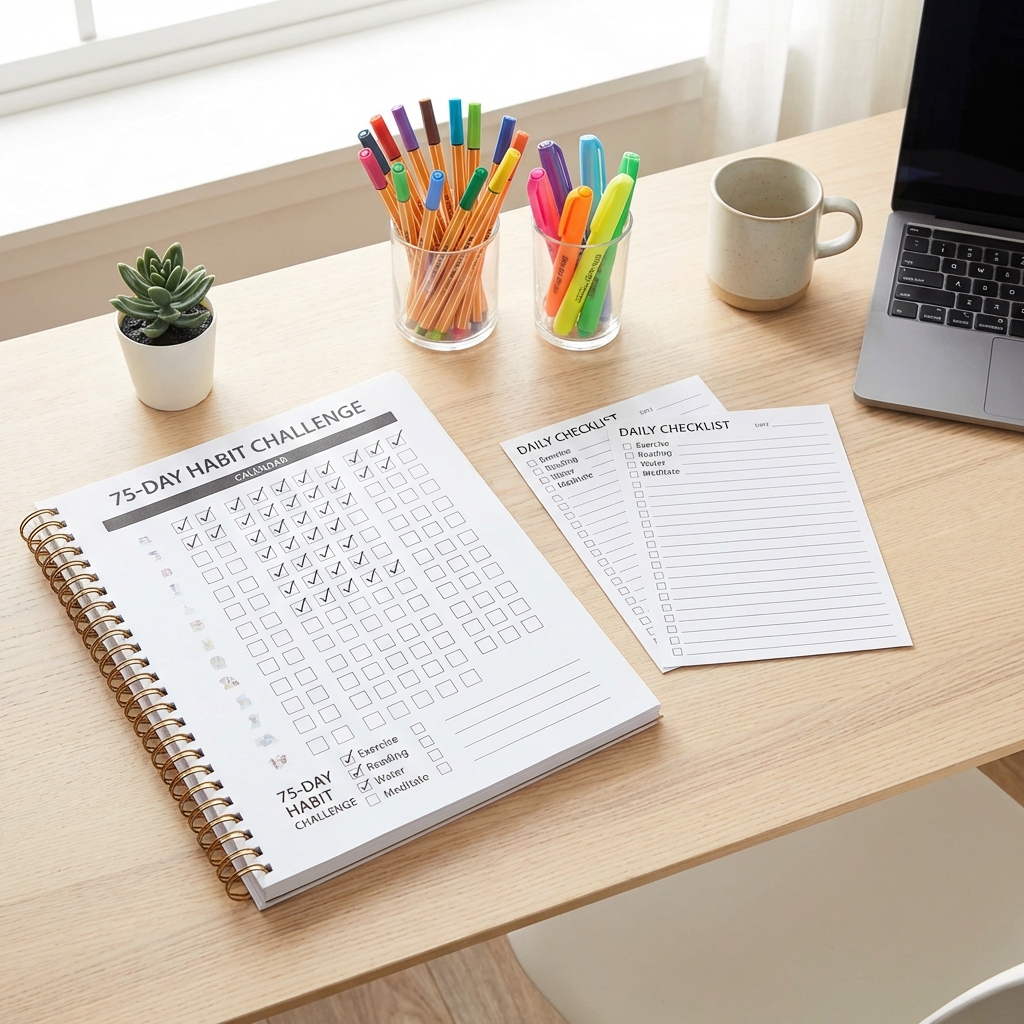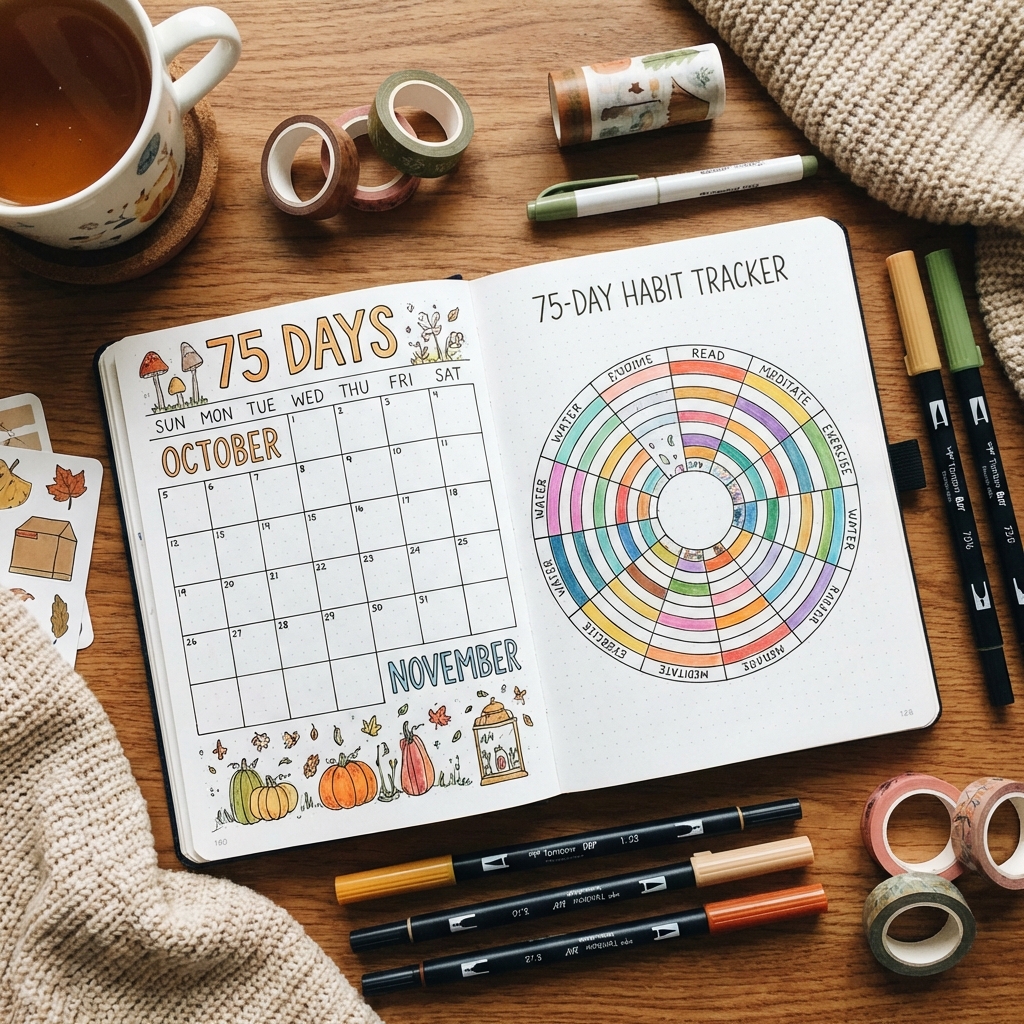
For the bullet journal community, tracking isn't just about checking boxes—it's an art form. The 75 Soft Challenge offers the perfect canvas for creative spreads: 75 days of daily habits, weekly reflections, and the satisfying visual story of transformation unfolding page by page.
Whether you're a minimalist BuJo purist or someone who can't resist washi tape and watercolor doodles, there's a 75 Soft layout that matches your style. This guide covers everything from simple one-page trackers to elaborate multi-spread systems—because the best journal is one that makes you excited to open it every day.
Why Bullet Journal for 75 Soft
The bullet journal method, created by Ryder Carroll, is built around flexibility and personalization—making it a natural fit for a 75-day challenge that's meant to adapt to your life.
The BuJo Advantage
- Complete customization: Design exactly the tracker you need, no compromises
- Creative expression: Make tracking a form of self-care and artistic outlet
- Analog satisfaction: The tactile pleasure of pen on paper
- Permanent record: A keepsake you can look back on for years
- Mindfulness practice: Setting up spreads and writing by hand promotes presence
Choosing Your Journal
If you're starting fresh, consider these popular options:
- Leuchtturm1917 A5: The classic BuJo choice with numbered pages and dot grid
- Rhodia Goalbook: Pre-printed index and future log, thicker paper
- Archer & Olive: 160gsm paper that handles watercolor and markers
- Muji dot grid notebooks: Budget-friendly, minimalist aesthetic
Your bullet journal will become a physical artifact of your 75 Soft journey—choose one you'll love opening every single day.
Monthly Overview Spread
A monthly overview gives you the big picture while tracking spans approximately 2.5 months. Here's how to structure it:
75-Day Calendar Grid
The centerpiece of your 75 Soft journal is often a calendar view of all 75 days. Options include:
- Linear grid: 75 boxes in rows across one or two pages
- Calendar format: Actual month calendars with challenge days highlighted
- Spiral layout: Artistic spiral from day 1 at center to day 75 on the outside
- Thermometer or progress bar: Vertical bar filling up as you progress
Month-by-Month Breakdown
Since 75 days spans roughly 2.5 months, you might create:
- Month 1 spread: Days 1-30 (or aligned to actual calendar)
- Month 2 spread: Days 31-60
- Month 3 spread: Days 61-75 plus reflection space
Elements to Include
- Day numbers with corresponding dates
- Small habit icons or checkboxes for each day
- Space for weekly tallies or notes
- Color coding for complete vs. incomplete days
- Milestone markers (Day 25, Day 50, Day 75)
Pro Tip: Draw Before You Start
Create your monthly spreads before Day 1. Having the structure ready removes barriers to tracking and lets you jump straight into logging each day. Plus, the anticipation of filling in those empty boxes is great motivation!
Weekly Spread Layout
Weekly spreads offer a closer view of your progress and space for more detailed tracking. For 75 Soft, you'll need approximately 11 weekly spreads.
Classic Weekly Layout
A two-page spread with days on the left and notes/tracking on the right:
- Left page: Seven day boxes with space for habit checkmarks
- Right page: Weekly goals, reflection prompts, notes section
Horizontal Weekly
Days run horizontally across two pages:
- Each day gets a vertical column
- Rows for each habit (Exercise, Diet, Reading, Water)
- Creates a natural habit tracking grid
- Space at bottom for weekly totals
Weekly Habit Tracker Grid
A dedicated habit grid for the week:
Week 3 (Days 15-21)        M   T   W   Th  F   S   Su
━━━━━━━━━━━━━━━━━━━━━━━━━━━━━━━━━━━━━━━━━━━━━━━━━━━
Exercise (45 min)          ●   ●   ○   ●   ●   ●   ○
Eat Well                   ●   ●   ●   ●   ●   ○   ●
Read (10 pages)            ●   ●   ●   ●   ●   ●   ●
Water (3L)                 ●   ●   ●   ●   ●   ●   ●
━━━━━━━━━━━━━━━━━━━━━━━━━━━━━━━━━━━━━━━━━━━━━━━━━━━
All 4 Complete?            ●   ●   ○   ●   ●   ○   ○

● = Complete  ○ = Missed/Recovery
Weekly Additions
- Week number: "Week 3 of 11" for quick reference
- Active recovery indicator: Mark which day is your rest day
- Book progress: What you're reading and pages read
- Workout types: Brief note of what exercise you did each day
- Weekly wins: Space to celebrate accomplishments
Daily Log Format
For those who want more detailed daily tracking, a dedicated daily log page (or half-page) for each day provides maximum space.
Essential Daily Elements
- Date and day number: "Day 23 | October 15"
- Four habit checkboxes: Large, satisfying boxes to check
- Workout details: Type, duration, notes
- Meals: Brief log or adherence rating
- Book/pages: What you read
- Water tracking: Glasses or liter marks
Optional Daily Elements
- Mood tracker: Simple rating or emoji
- Energy levels: Morning vs. evening
- Gratitude: One thing you're thankful for
- One-line reflection: How did today go?
- Tomorrow's intention: One focus for the next day
Rapid Logging vs. Detailed Entries
True to BuJo origins, you can choose between:
- Rapid logging: Quick symbols and short bullets—takes 1-2 minutes
- Detailed journaling: Full sentences, reflections—takes 5-10 minutes
- Hybrid approach: Rapid log daily, detailed entry weekly
Start with the minimum you'll actually do. You can always add more detail later, but an abandoned elaborate system helps no one.
Progress Charts and Trackers
Visual progress charts are where bullet journals really shine. These creative trackers turn data into art.
Circular Habit Wheel
Draw a circle divided into 75 wedges (like a pie chart). Each wedge represents a day. Color it in when complete. As you progress, the circle fills up beautifully.
- Use different colors for each habit, or one color for all-complete days
- Leave wedges empty for missed days—creates an honest visual record
- Add concentric circles for different metrics
Bar Chart Tracker
Create a bar for each week:
- Height represents completion rate (7/7 = full height)
- Stack four sections for each habit in different colors
- Watch your "skyline" grow week by week
Mood/Energy Tracker
A year-in-pixels style tracker adapted for 75 days:
- 75 small squares in a grid
- Color each based on mood (green = great, yellow = okay, red = tough)
- Creates a beautiful mosaic showing emotional patterns
Mountain or Path Tracker
Draw a winding mountain path or hiking trail:
- Mark 75 checkpoints along the path
- Your "hiker" moves forward each completed day
- Add mile markers at milestones (25, 50, 75)
- Summit reached at Day 75!
Bookshelf Tracker for Reading
Draw a bookshelf and add a book spine for each book you finish during the challenge. Even if you only complete 2-3 books over 75 days, the visual of your growing library is deeply satisfying. Include titles, dates finished, and small ratings.
Reflection Pages and Prompts
Beyond tracking, bullet journals excel at reflection. Dedicate pages to deeper thinking about your journey.
Weekly Reflection Template
- Wins this week: What went well?
- Challenges faced: What was hard?
- Lessons learned: What would I do differently?
- Gratitude: What am I thankful for?
- Next week's focus: One intention for the week ahead
Milestone Reflection Pages
Create special pages at key points:
- Day 25: One-third through—what's working? What needs adjustment?
- Day 50: Two-thirds through—who am I becoming?
- Day 75: Completion reflection—full review of the journey
Before & After Pages
- Day 1 page: Stats, measurements, goals, how you feel right now
- Day 75 page: Updated stats, achievements, changes noticed
- Leave space to compare these side by side
Journal Prompts Collection
Create a page of prompts to use throughout the challenge:
- What did I learn about myself today?
- When did I most want to quit, and why didn't I?
- How is my relationship with [food/exercise/rest] changing?
- What habit feels most natural now?
- What surprised me about this challenge?
Decorating and Personalizing
For many BuJo enthusiasts, the artistic element is part of the joy. Here's how to make your 75 Soft pages beautiful:
Color Schemes
- Monthly themes: Different color palette each month of the challenge
- Habit-coded: Blue for water, orange for exercise, green for diet, purple for reading
- Mood-based: Colors reflect how you felt that day
- Seasonal: Colors that match the time of year you're doing the challenge
Decorative Elements
- Headers: Hand-lettered titles with banners or frames
- Dividers: Washi tape, drawn lines, or stickers
- Doodles: Small illustrations related to your habits
- Stickers: Reward stickers for completed days or milestones
- Stamps: Quick decoration with rubber stamps
Supplies to Have Ready
- Fine-tip pens (Micron, Staedtler) for writing
- Brush pens for headers (Tombow, Pentel)
- Highlighters or mildliners for color
- Washi tape for borders and decoration
- A good ruler for clean lines
- Stencils if you want consistent shapes
Minimalist vs. Artistic Approaches
There's no right way to BuJo your 75 Soft. Choose the approach that matches your personality and time availability.
The Minimalist Path
For those who want function over form:
- One color (black pen only)
- Simple checkboxes, no decoration
- Focus on rapid logging
- Setup time: 5-10 minutes per spread
- Daily logging: 30 seconds to 1 minute
The Artistic Path
For those who find joy in the creative process:
- Full color spreads with illustrations
- Hand-lettered headers and titles
- Decorative elements throughout
- Setup time: 30-60 minutes per spread
- Journaling becomes a creative practice
The Hybrid Path
Meeting in the middle:
- Minimal daily tracking for consistency
- Artistic spreads for weekly and monthly overviews
- Decoration during setup, not daily use
- Best of both worlds for busy but creative people
The Only Rule
Don't let aesthetics become a barrier to tracking. A quick scribbled checkmark beats a beautiful spread you never filled in. If decorating starts feeling like a chore, simplify immediately. The goal is tracking habits, not creating Instagram content.
Getting Started: Your First Spread
Ready to begin? Here's a simple first setup to get you tracking on Day 1:
Minimum Viable BuJo Setup
- Index page: List where everything will be
- 75 Soft overview: One page with the rules and your start/end dates
- 75-day tracker: A grid of 75 boxes across 1-2 pages
- Week 1 spread: Your first weekly layout
That's it. You can add monthly spreads, daily logs, and decorative elements as you go. Start simple and evolve your system based on what you actually use.