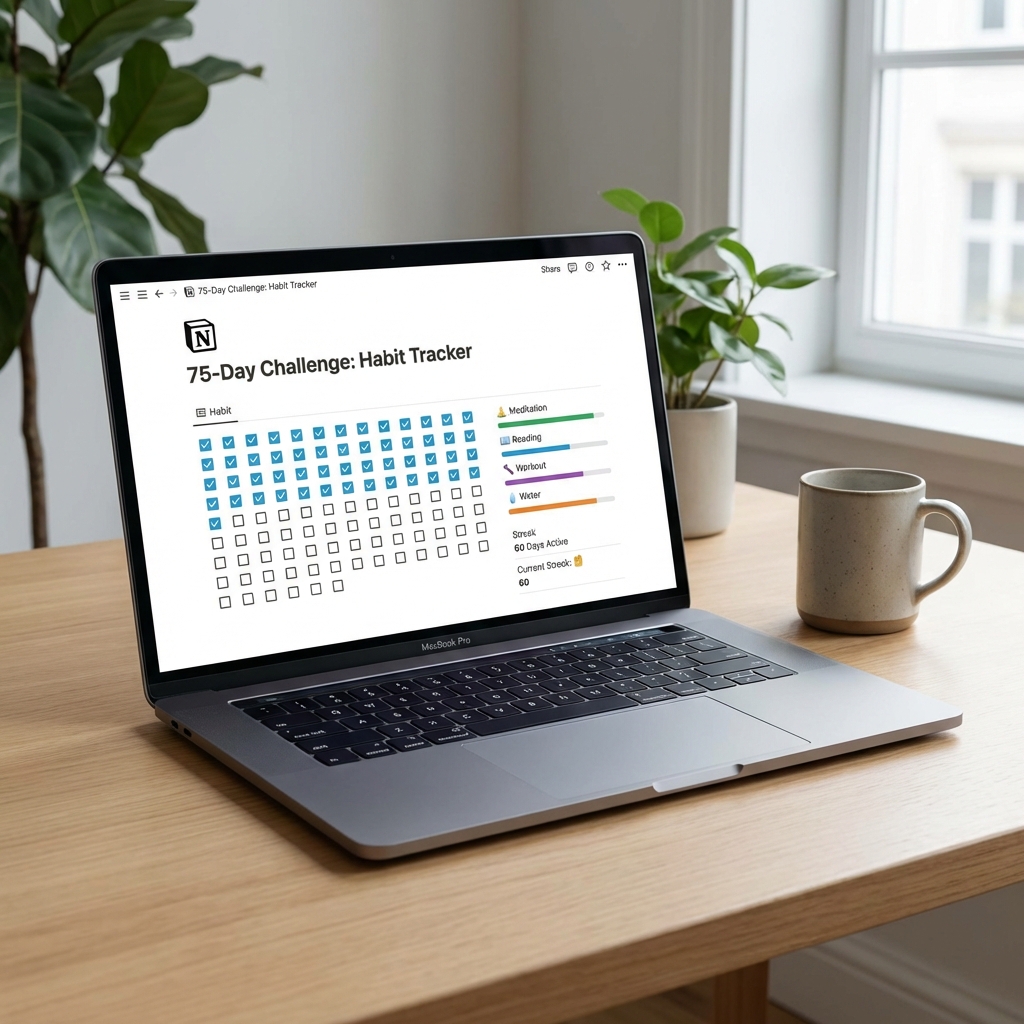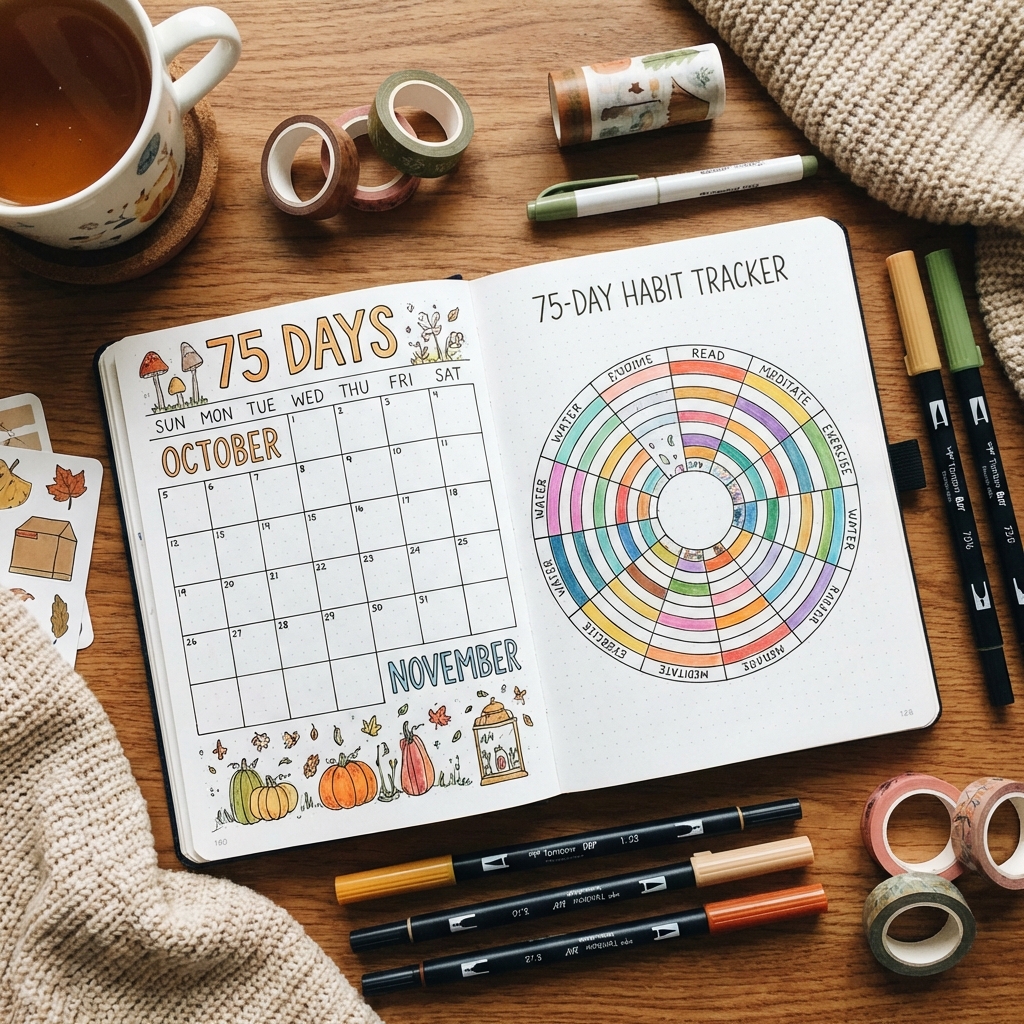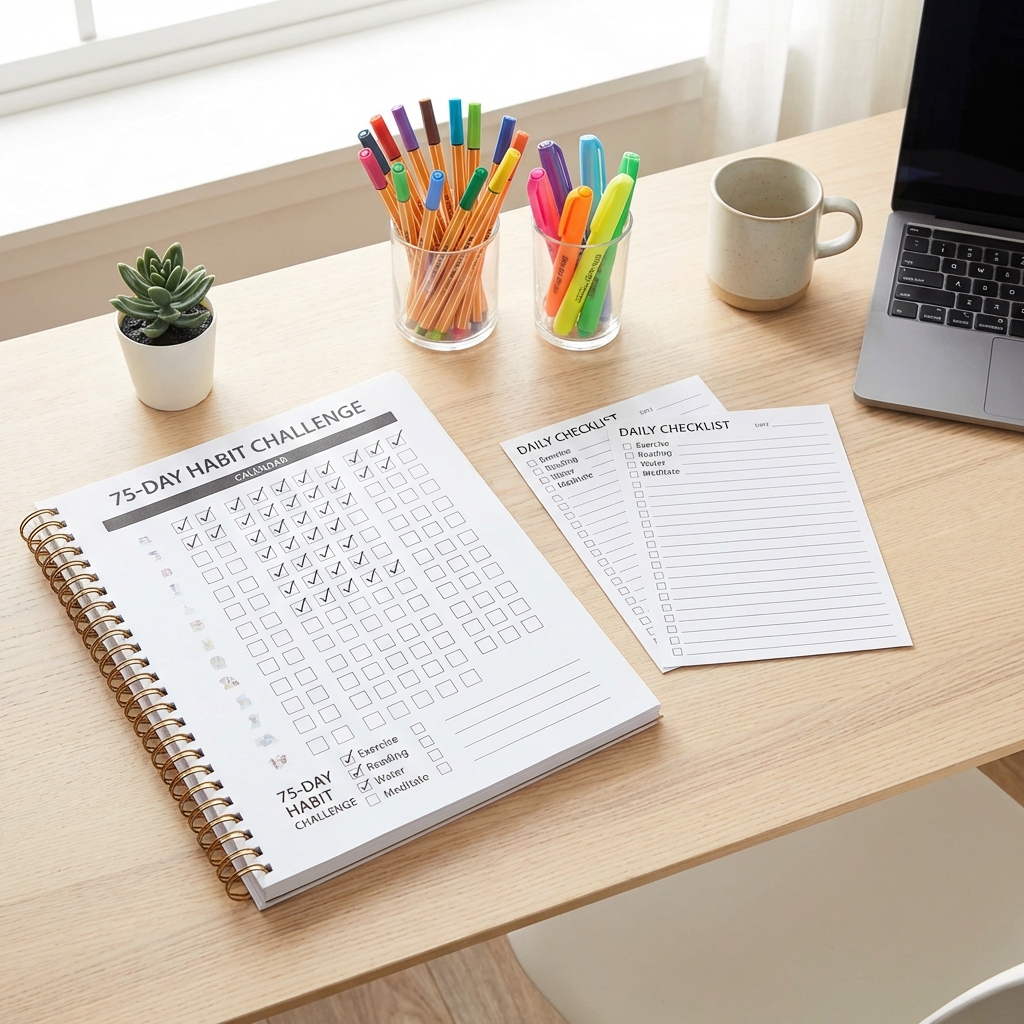
There's something deeply satisfying about checking off a physical box with a pen. No battery to charge, no app to update, no notifications to dismiss. Just you, paper, and the simple act of tracking your progress one day at a time.
Paper-based tracking isn't old-fashioned—it's intentional. Research suggests that the physical act of writing engages your brain differently than typing, helping cement habits and reinforce commitment. For many 75 Soft participants, a printed tracker becomes a visual reminder of progress that no smartphone notification can replicate.
Why Paper Tracking Works
In a world of apps and digital dashboards, you might wonder why anyone would choose paper. The answer lies in psychology and practicality.
The Psychological Benefits
- Physical engagement: Writing by hand activates different brain regions than typing, improving memory and commitment
- Visual satisfaction: A wall of checked boxes is tangible proof of progress you can see every single day
- Reduced digital fatigue: For those already overwhelmed by screens, paper offers a refreshing break
- Intentional action: Finding your tracker, picking up a pen, and marking your progress is a mindful ritual
Practical Advantages
- Zero learning curve: No app to download, no account to create, no settings to configure
- Always accessible: Post it on your fridge, keep it on your desk, carry it in your bag
- No battery required: Your tracker never runs out of charge or needs an update
- Flexibility: Add notes, doodles, or personal touches that apps don't allow
The best tracking system is the one you'll actually use. For many people, that means something they can hold in their hands.
The 75-Day Calendar Overview
A 75-day calendar gives you the big picture—a visual representation of your entire journey at a glance. Here's what an effective calendar tracker includes:
Calendar Grid Layout
The simplest format is a grid with 75 boxes, one for each day. You can organize this as:
- Linear grid: 75 boxes in rows, easy to follow from start to finish
- Weekly format: 11 rows of 7 days (with the last row having only 5)
- Monthly format: Split into approximately 2.5 months, following actual calendar dates
What to Include on Each Day
- Day number (1-75)
- Actual date (helpful for planning around events)
- A checkbox or space for a mark/sticker
- Optional: small icons for each of the four habits
Pro Tip: Start Date Planning
Before filling in your calendar, count forward 75 days from your start date. Mark any travel, holidays, or challenging periods so you can mentally prepare. This foresight helps you plan around obstacles rather than being surprised by them.
Daily Habit Checklist
The daily checklist is the heart of 75 Soft tracking. Each day, you check off the four core habits. A well-designed daily tracker includes:
The Four Core Habits
- ☐ 45 minutes of exercise (with space to note what you did)
- ☐ Eat well / follow your diet (with optional meal notes)
- ☐ Read 10 pages (with space for book title)
- ☐ Drink 3 liters of water (with tally marks for tracking)
Optional Additions
- Active recovery indicator: Mark which day is your recovery day each week
- Mood rating: Simple 1-5 scale or emoji to track how you felt
- Energy level: Morning vs. evening energy comparison
- Notes section: Quick wins, challenges, or observations
Sample Daily Checklist Format
Weekly Reflection Tracker
While daily tracking keeps you accountable, weekly reflection helps you learn and adjust. A weekly tracker should prompt you to step back and assess your journey.
Weekly Reflection Prompts
- Wins this week: What went well? What are you proud of?
- Challenges: What was hard? What almost derailed you?
- Lessons learned: What would you do differently?
- Adjustments: Any tweaks to make for next week?
- Gratitude: One thing you're grateful for this week
Weekly Stats Summary
- Days completed: ___/7
- Workouts completed: ___/7 (or ___/6 + 1 recovery)
- Average water intake: ___L
- Pages read: ___
- Diet adherence: ___ %
Weekly reflection turns experience into wisdom. Without reflection, you're just going through the motions—with it, you're building self-knowledge that lasts beyond 75 days.
Progress Measurement Log
Beyond daily habits, many people want to track physical and mental changes over the 75 days. A progress log captures these measurements at regular intervals.
Physical Measurements
Track these weekly or bi-weekly (same day, same time, same conditions):
- Weight: If that's meaningful to you (it's optional)
- Body measurements: Chest, waist, hips, thighs, arms
- Progress photos: Front, side, back (same lighting, same outfit)
- Fitness markers: Max push-ups, plank hold time, running pace
Mental and Emotional Tracking
- Energy levels: Morning, afternoon, evening ratings
- Sleep quality: Hours slept and how rested you feel
- Stress levels: 1-10 scale with notes on causes
- Mood patterns: Overall emotional state and triggers
Note on Weight Tracking
Weight tracking is entirely optional and not for everyone. If you have a history of disordered eating or if weighing yourself triggers unhealthy behaviors, skip it entirely. Body measurements, energy levels, or fitness markers can be far more meaningful indicators of progress.
How to Use These Printables Effectively
Having a printable is one thing—using it consistently is another. Here's how to make your paper tracking system actually work:
1. Make It Visible
Put your tracker somewhere you'll see it multiple times a day. Popular spots include:
- Refrigerator door (you'll see it at every meal)
- Bathroom mirror (morning and evening reminder)
- Desk or workspace (constant visual cue)
- Bedside table (last thing at night, first in the morning)
2. Make It a Ritual
Choose a specific time each day to update your tracker. Options include:
- Morning: Plan what you'll accomplish today
- Evening: Review and check off what you completed
- Throughout the day: Check off each habit immediately after completing it
3. Make It Satisfying
- Use a pen that feels good to write with
- Try colored pens or markers for different habits
- Add stickers for completed days if that motivates you
- Cross off or highlight completed days dramatically
4. Keep It Simple
Resist the urge to over-engineer your tracking. The more complex your system, the more likely you are to abandon it. Start minimal and only add elements you genuinely find useful.
Where to Find More Free Printables
Beyond creating your own, there are many free resources for 75 Soft printables:
Free Resources
- Pinterest: Search "75 Soft printable tracker" for dozens of free options in various styles
- 75soft.com: The official site offers free printable trackers designed specifically for the challenge
- Canva: Use their free templates to create your own customized tracker
- Reddit: The r/75soft community often shares free printables created by members
Paid Options
- Etsy: More designed, aesthetic options typically $1-5 for PDF bundles
- Gumroad: Creator-made trackers with unique features
- Amazon: Physical 75 Soft journals and planners
DIY Option: Create Your Own
The most personalized tracker is one you design yourself. Use a simple word processor or free tools like Google Docs, Canva, or even graph paper. Your handmade tracker might become the one you treasure most—especially after 75 days of meaningful marks.
Choosing the Right Printable for You
With so many options, how do you choose? Consider these factors:
Your Tracking Style
- Minimalist: Simple checkboxes, no frills, just the essentials
- Data-driven: Space for measurements, notes, and detailed tracking
- Creative: Room for doodles, colors, stickers, and personalization
- Reflective: Emphasis on journaling prompts and weekly reflection
Your Living Situation
- Shared spaces: Consider a smaller, more private tracker
- Solo living: Go big with a wall calendar you can mark up proudly
- Traveling often: Choose pocket-sized or digital backup options