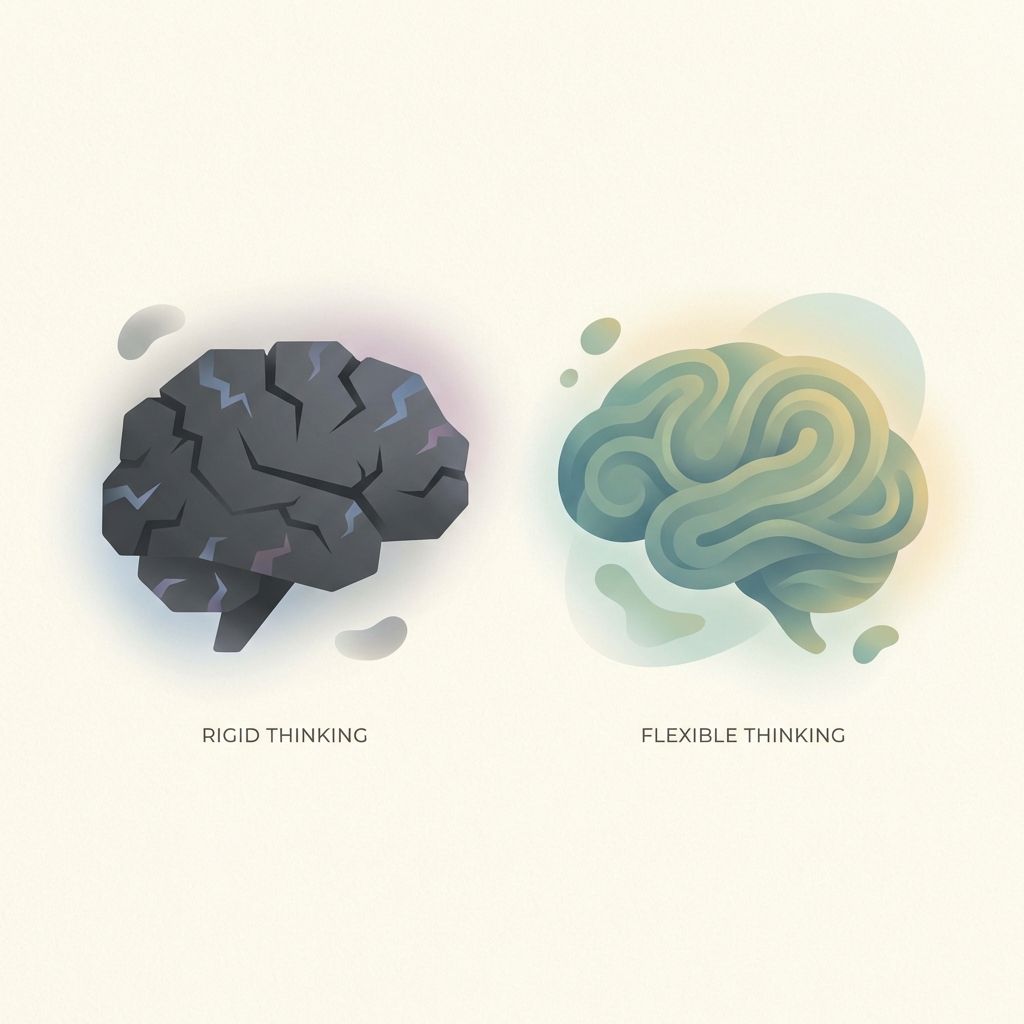
When I first heard about 75 Hard, I was intrigued but also immediately overwhelmed. Two 45-minute workouts daily? Zero alcohol? No cheat meals? The all-or-nothing nature felt less like a challenge and more like a recipe for failure—at least for me. Then I discovered 75 Soft, and everything clicked. But why? What makes flexible challenges psychologically superior to rigid ones?
The answer lies in decades of behavioral psychology research, and it challenges the "no-excuses" mentality that dominates fitness culture. As it turns out, the science is clear: flexibility isn't weakness—it's strategy.
The All-or-Nothing Trap
All-or-nothing thinking—sometimes called "black-and-white thinking" or "dichotomous thinking"—is a cognitive distortion that categorizes experiences into extreme opposites. You either succeed completely or fail entirely. There's no middle ground, no partial credit, no room for human imperfection.
In fitness challenges, this manifests as restart rules. Missed a workout? Start over from Day 1. Had a glass of wine at a wedding? Reset the clock. This design creates a paradox: the very mechanism meant to ensure compliance often guarantees failure.
The Psychological Paradox
Research shows that strict "no restart" rules can actually decrease long-term success rates. When people believe one slip means total failure, they're more likely to abandon the entire effort rather than simply resume the next day.
Consider this scenario: You're on Day 45 of 75 Hard. You've built incredible momentum. Then, life happens—a family emergency, illness, or simply an overwhelmed moment—and you miss a requirement. Under strict rules, those 45 days of progress are "erased." The psychological impact of this reset is devastating. Many people never restart at all.
What Experts Say About Extreme Challenges
Healthcare professionals have raised significant concerns about ultra-rigid fitness challenges. According to Penn State Health experts, programs like 75 Hard can be problematic for several reasons:
- Injury risk: Demanding two daily workouts without rest days ignores basic recovery science
- Burnout potential: Extreme programs produce short-term compliance but poor long-term adherence
- Mental health strain: All-or-nothing rules can trigger or exacerbate disordered eating patterns and exercise compulsion
- Unrealistic expectations: Most people can't sustain extreme protocols alongside work, family, and life responsibilities
"Rather than testing your willpower and denying yourself with a stringent diet, the 75 Soft program suggests doing your best and making healthier choices—something that's easier for people to manage for the long haul." — Penn State Health
The experts recommend starting gradually: 15 minutes of exercise daily, five days a week, building up over four weeks. This approach—incremental, sustainable, forgiving—aligns perfectly with 75 Soft's philosophy.
Self-Determination Theory: Why Autonomy Matters
Self-Determination Theory (SDT), developed by psychologists Edward Deci and Richard Ryan, identifies three fundamental human needs for motivation: autonomy, competence, and relatedness. When these needs are met, intrinsic motivation flourishes. When they're thwarted, motivation withers.

Autonomy in 75 Soft
75 Soft respects your autonomy by offering flexibility within structure. You choose what "eating well" means for your body. You decide which workouts suit your schedule. You determine which personal development books resonate with you. This autonomy transforms the challenge from external imposition to personal ownership.
Competence Through Achievable Goals
The 75 Soft requirements are challenging but achievable. One workout daily (with a rest day option), reasonable hydration, 80/20 eating—these build competence because success is within reach. Each completed day reinforces your belief: "I can do this."
Relatedness Without Shame
The 75 Soft community emphasizes progress over perfection. There's no public shaming for imperfect days, no competitive comparison to others' streaks. This supportive environment meets our need for connection without weaponizing it against us.
The Flexible Mindset Advantage
Carol Dweck's research on fixed versus growth mindsets applies directly to fitness challenges. A fixed mindset sees abilities as static: "I either have discipline or I don't." A growth mindset sees abilities as developable: "I can build discipline through practice."
Flexible challenges cultivate growth mindsets by design. When stumbles are expected and accommodated—rather than punished with restarts—participants learn resilience. They understand that temporary setbacks don't define their capability.
Growth Mindset in Action
Fixed mindset response to missing a workout: "I failed. I'm not
disciplined enough. Why bother continuing?"
Growth mindset response: "I missed today. What can I learn? How can I
adjust tomorrow? This is part of the process."
Breaking the Abstinence Violation Effect
The "abstinence violation effect" (AVE) is a psychological phenomenon where breaking a self-imposed rule leads to complete abandonment of the goal. It's the "I already ruined my diet with that cookie, so I might as well eat the whole box" phenomenon.
AVE is particularly strong when:
- Rules are absolute (no exceptions)
- Violations are viewed as personal failure (rather than situational)
- Identity is tied to perfect compliance
75 Hard activates all three triggers. 75 Soft deliberately defuses them. The 80/20 eating approach builds imperfection into the system. The absence of a restart rule removes the catastrophic consequence of a single slip. The focus on building habits—rather than proving "mental toughness"—detaches identity from perfect performance.
Mental Health Benefits of Gentle Discipline
The mental health implications of challenge design are profound. Rigid programs can trigger or worsen:
- Anxiety: Constant fear of "breaking the streak"
- Obsessive behaviors: Hypervigilance about rules
- Disordered eating: Food restriction and guilt cycles
- Exercise addiction: Compulsive workout patterns
- Shame spirals: Self-attack after perceived failures
Flexible programs like 75 Soft can support mental health by:
- Reducing perfectionism: Imperfection is built into the design
- Building self-compassion: Stumbles are normalized
- Encouraging balance: Rest days and social flexibility are permitted
- Developing resilience: Recovery from setbacks becomes the skill
You cannot hate yourself into a version of yourself you love. Sustainable transformation requires self-compassion, not self-punishment.
The Science of Sustainable Change
Research on behavior change consistently shows that sustainable transformation follows predictable patterns:
The 66-Day Habit Formation Window
A study published in the European Journal of Social Psychology found that forming a new habit takes, on average, 66 days—ranging from 18 to 254 days depending on complexity. The 75-day duration of both 75 Hard and 75 Soft falls within this window, but with a crucial difference: 75 Soft's flexibility increases the likelihood of actually reaching Day 75.
Consistency Over Intensity
Multiple studies confirm that workout frequency matters more than workout intensity for long-term fitness. Showing up for moderate exercise regularly outperforms occasional intense sessions. 75 Soft's single daily workout (with rest day option) aligns with this research.
Identity-Based Change
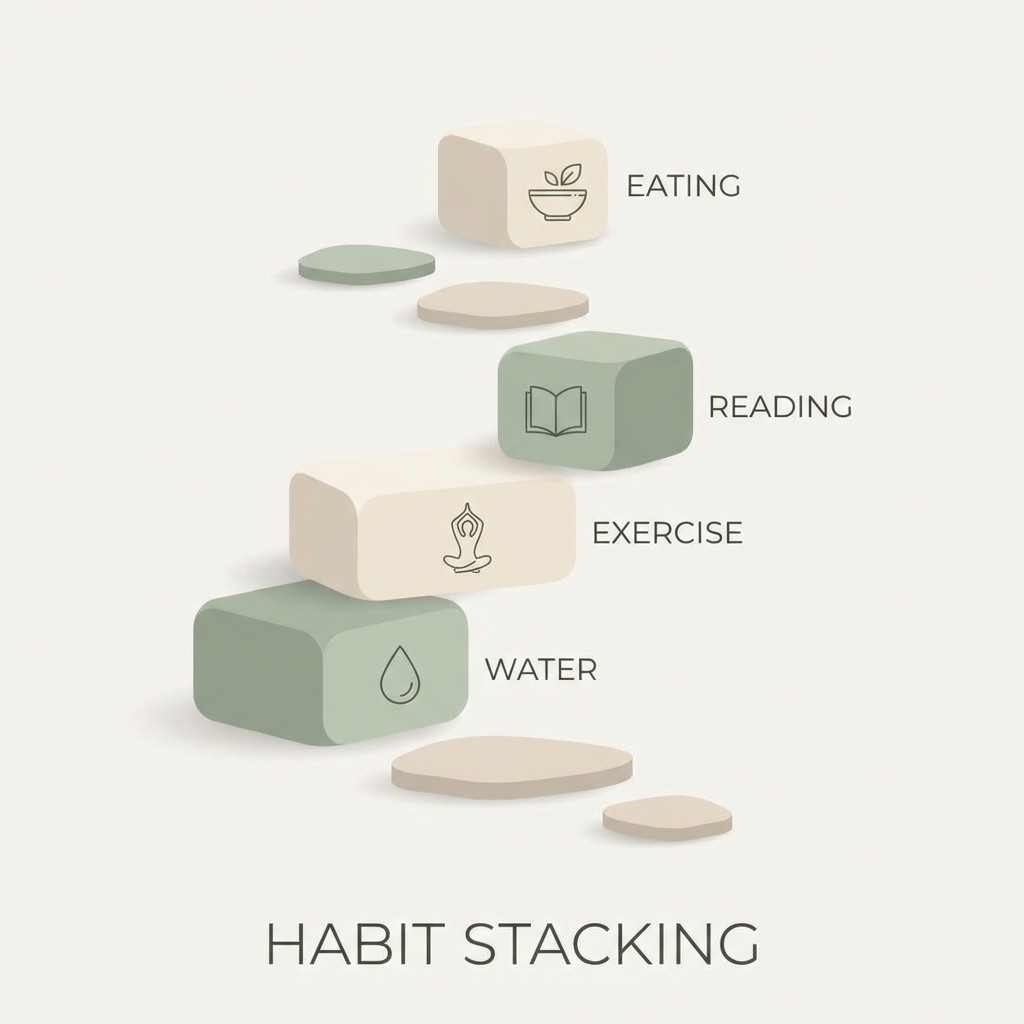
James Clear's research in Atomic Habits emphasizes identity over outcomes. Instead of "I want to lose weight," focus on "I am someone who moves my body daily." 75 Soft supports identity formation by making daily habits achievable, reinforcing the identity with each completed day.

Applying Flexibility to Your 75 Soft Journey
Understanding the psychology is valuable, but applying it is transformational. Here's how to leverage flexible thinking throughout your 75 Soft experience:
1. Reframe "Imperfect" Days
When you have a day that doesn't go perfectly, practice cognitive reframing. Instead of "I failed," try: "I learned something about my triggers" or "I'm building data about what works for me."
2. Build Contingency Plans
Flexibility doesn't mean no planning—it means adaptive planning. What's your backup workout when the gym is closed? What's your "good enough" meal when cooking isn't possible? Having these ready prevents all-or-nothing spirals.
3. Celebrate "Minimum Viable" Days
Some days, you'll crush your habits. Other days, you'll barely meet them. Both count. Celebrate the days you showed up at 60% capacity—those are often the most important days for building lasting habits.
4. Track Progress, Not Perfection
Use your tracking system to measure trends over time, not daily perfection. Are you drinking more water than before you started? Moving your body more consistently? Reading regularly? Those trends matter far more than any single day.
5. Practice Self-Compassion Actively
Self-compassion isn't passive—it's a skill. When you stumble, actively speak to yourself as you would to a friend. Acknowledge the difficulty. Recognize your humanity. Then gently redirect toward your next action.
Ready to apply these psychological principles? Learn how to build atomic habits with 75 Soft or discover strategies for staying motivated for the full 75 days.