When life falls apart—through burnout, heartbreak, job loss, health crises, or major transitions—the hardest part often isn't the event itself. It's figuring out how to rebuild from the wreckage. How do you find structure when everything feels chaotic? How do you take care of yourself when you barely have the energy to exist?
This is where 75 Soft becomes something more than a fitness challenge. It becomes a gentle scaffolding for rebuilding your life—one small, manageable habit at a time. Not to punish yourself into shape, but to lovingly guide yourself back to wholeness.
Why Major Transitions Derail Our Habits
When we go through major life changes, our habits are often the first casualties. This isn't weakness—it's biology. Stress hormones like cortisol affect our prefrontal cortex, the brain region responsible for planning, decision-making, and impulse control. In survival mode, the brain prioritizes getting through each moment, not optimizing long-term health.
Add to this the exhaustion that accompanies most transitions—whether from sleepless nights with a newborn, the emotional drain of grief, or the all-consuming nature of burnout—and it's no wonder healthy habits fall away. We reach for comfort food because it literally activates our brain's reward centers. We skip workouts because we're running on empty. We doom-scroll instead of reading because our minds crave numbing, not engagement.
"I slipped into survival mode. The only things getting me through were candy and TikTok at the end of each night. At my worst, I was eating a bag of jelly beans every night." — Carly Riordan, Mom Edition 75 Soft
This isn't failure. This is a normal response to abnormal circumstances. But at some point, survival mode itself becomes the problem—the coping mechanisms that got you through the crisis start holding you back from recovery.
Why 75 Soft Works for Recovery
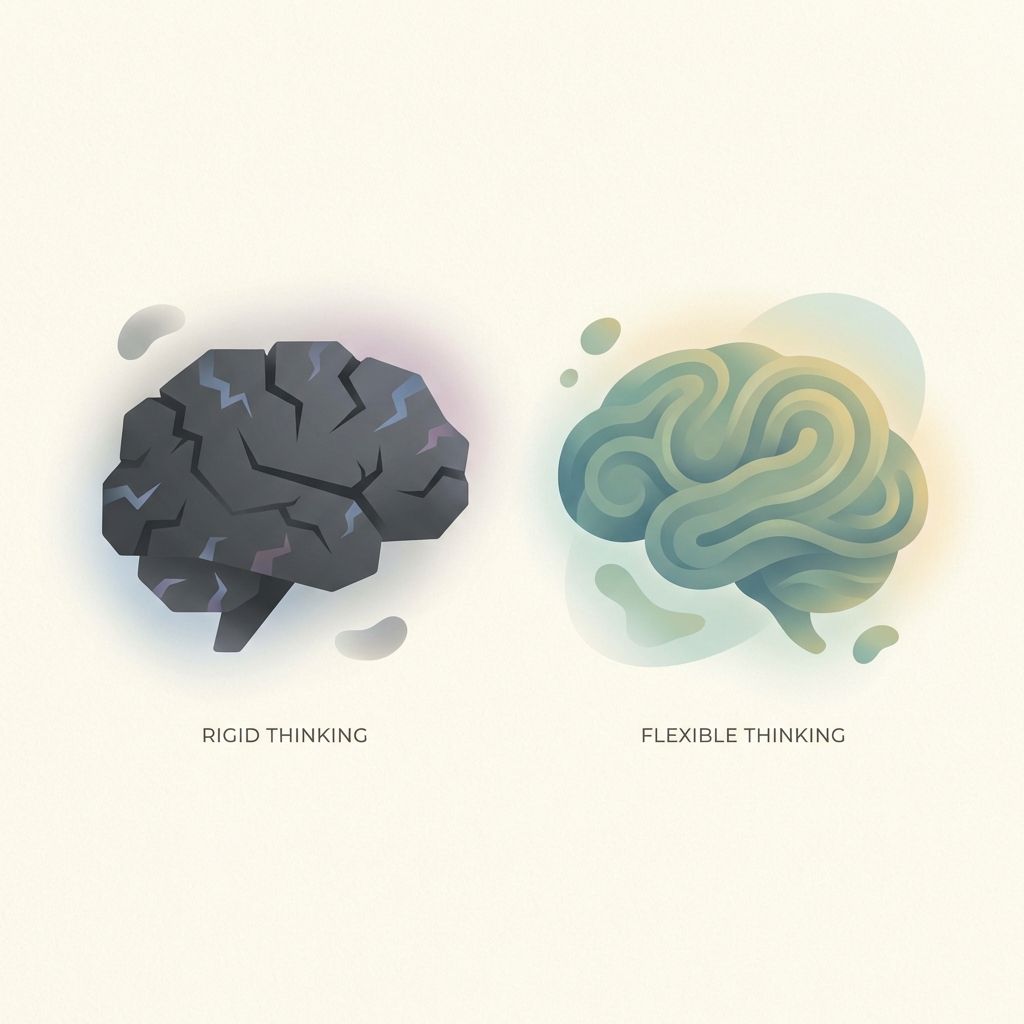
75 Hard would be inappropriate—even dangerous—for someone recovering from burnout or processing a major life transition. Its rigid rules, lack of rest days, and restart penalties create exactly the kind of pressure that breaks people in fragile states.
75 Soft, by contrast, offers several features that make it ideal for recovery:
Why 75 Soft is Recovery-Friendly
Built-in rest: Weekly active recovery days acknowledge that rest is
part of the process
No restart penalty: Imperfect days don't erase progress—they're just
days
Flexible eating: 80/20 approach allows comfort without chaos
Modifiable intensity: "45 minutes of exercise" can mean a gentle
walk
Mental health focus: Reading personal development can directly address
recovery
Most importantly, 75 Soft provides structure without rigidity. When you're lost in the chaos of transition, having four simple daily practices creates a container—something steady to hold onto while everything else shifts.
After Burnout: A Gentle Re-Entry
Burnout isn't just tiredness—it's a deep exhaustion that affects your physical, emotional, and cognitive functioning. Recovery from burnout typically requires months, not weeks, and pushing too hard too fast often triggers relapse.
Modified Approach for Burnout
- Exercise: Start with walks, stretching, or restorative yoga. Avoid high-intensity workouts initially—they can spike cortisol and delay recovery.
- Eating: Focus on nourishment over restriction. Your body needs fuel to heal. The goal is regular, balanced meals, not perfection.
- Hydration: Dehydration worsens fatigue and cognitive fog—both already present in burnout. This habit is especially important.
- Reading: Choose books on recovery, boundaries, rest. Recommendations: Burnout by Emily & Amelia Nagoski, Rest by Alex Soojung-Kim Pang.
Signs You're Recovering
- You have energy beyond just getting through the day
- Enthusiasm or interest in activities returns
- Sleep improves in quality
- Irritability and cynicism decrease
- You feel present rather than numb
Postpartum & New Parent Reset
The postpartum period—whether that's 3 months or 3 years—involves profound physical, hormonal, and identity changes. Sleep deprivation alone can make healthy habits feel impossible. Blogger Carly Riordan documented her 75 Soft journey as a new mom, highlighting how the challenge helped her reset after months of survival mode.
Important Note
If you're recently postpartum, get medical clearance before starting any exercise program. If you're breastfeeding, hydration becomes even more crucial—aim for the higher end of water intake. And please: sleep when you can. A workout is not more important than rest during this phase.
Modified Approach for New Parents
- Exercise: 15-20 minute home workouts, baby-wearing walks, or YouTube videos during nap time. Consistency matters more than intensity.
- Eating: Prep simple, nourishing foods you can eat one-handed. Smoothies, overnight oats, and batch-cooked proteins are lifesavers.
- Hydration: Keep water bottles everywhere—by your nursing spot, on the nightstand, in every room.
- Reading: Audiobooks count! Listen while feeding, walking, or doing dishes. Choose books that feel supportive, not prescriptive.
After Breakup or Divorce
The end of a relationship—especially a long-term one—can feel like a death. Your routines, living situation, social circle, and identity all shift simultaneously. It's common to either abandon self-care entirely or swing to the opposite extreme of punishing exercise and restrictive eating.
75 Soft offers a healthy middle path: structure without punishment, self-improvement without self-destruction.
Using 75 Soft for Heartbreak Recovery
- Exercise: Movement helps process grief physically. Walking, running, dance, boxing—whatever helps you move stuck energy.
- Eating: The 80/20 approach prevents either extreme—neither starvation nor binge eating serves healing.
- Hydration: Tears are dehydrating. Seriously. Drink more water.
- Reading: Consider: It's Called a Breakup Because It's Broken, Radical Acceptance by Tara Brach, Untamed by Glennon Doyle.
The Identity Benefit
After a relationship ends, many people feel unmoored—who are they without their partner? 75 Soft provides a way to rebuild identity around your own choices. You become someone who moves their body, nourishes themselves, stays hydrated, and prioritizes growth. These become pillars of a new self that isn't defined by the relationship.
Job Loss & Career Transitions
Losing a job—whether through layoff, firing, or resignation—disrupts more than income. It disrupts structure, identity, social connection, and purpose. Days can blur together without the rhythm of work.
75 Soft creates structure when external structure disappears. The four daily habits become anchors that make each day feel purposeful, even when you're job searching, reassessing, or recovering from a toxic workplace.
Using 75 Soft During Job Transition
- Exercise: Morning movement provides structure to the day and boosts mood for job searching. Treat it like a non-negotiable appointment.
- Eating: Budgets may tighten, but eating well doesn't require expensive ingredients. Focus on affordable, nutritious basics.
- Hydration: Easy win that requires no money and boosts cognitive function for interviews and applications.
- Reading: Mix career development books (like What Color Is Your Parachute?) with mindset books (like Mindset by Carol Dweck).
After Grief & Loss
Grief is not a problem to be solved. It's a process to be lived. 75 Soft should never be used to avoid grieving or "power through" loss. But once you've moved through the acute phase and are ready to re-engage with life, gentle structure can help.
There is no timeline for grief. Use 75 Soft when you feel ready, not when others think you should be "over it."
Gentle Grief-Adapted 75 Soft
- Exercise: Movement can help grief move through the body. Walking in nature is particularly healing. Go gently.
- Eating: Grief often suppresses or amplifies appetite. The goal is simply to eat regularly, not perfectly.
- Hydration: Basic self-care that doesn't ask too much of you.
- Reading: Consider: It's OK That You're Not OK by Megan Devine, On Grief and Grieving by Elisabeth Kübler-Ross.
Modified 75 Soft for Recovery: The Compassionate Version
If standard 75 Soft feels like too much during a difficult period, try this gentler modified version:
Recovery Edition Rules
Movement: 20-30 minutes of any movement (walking counts). Rest days as
needed, not just once per week.
Eating: Three nourishing meals per day. No pressure for perfection.
Just eating regularly.
Hydration: 2 liters of water (not 3). Small, achievable goal.
Reading/Listening: 10 pages OR 15 minutes of audiobook/podcast on
personal growth.
Duration: 30 days initially, with option to extend to 75 when ready.
The Goal is Function, Not Perfection
During recovery, the goal isn't transformation—it's stabilization. You're not trying to become a new person. You're trying to take care of the person you are right now, who is going through something hard.

When to Pause or Seek Help
75 Soft is not therapy, and it's not a substitute for professional support. If you're experiencing any of the following, please pause the challenge and seek appropriate help:
- Persistent thoughts of self-harm or suicide
- Inability to perform basic daily functions
- Deep depression that doesn't lift with movement or connection
- Obsessive thoughts about food, exercise, or body image
- Physical symptoms that need medical attention
- Feeling worse after starting the challenge, not better
Resources
National Suicide Prevention Lifeline: 988 (US)
Crisis Text Line: Text HOME to 741741 (US)
International Association for Suicide Prevention: Crisis Centers Directory
Real Reset Stories
Carly's Postpartum Reset: After months of survival mode during a difficult pregnancy and newborn phase, Carly used 75 Soft to reset her habits. "More than anything it was a mental reset," she shares. "I didn't do this to lose weight or transform my body. I really needed a reset on my habits... breaking the ones I had slipped into mindlessly and building good ones I had been neglecting."
Her key insight: "Choosing things that were doable but a stretch. Nothing I chose was crazy or overly demanding. They just aligned with the values I wanted to follow in my life."
The Common Thread: People who successfully use 75 Soft for reset share these characteristics:
- They adapt the rules to their current capacity
- They focus on rebuilding habits, not achieving specific outcomes
- They practice self-compassion when they stumble
- They celebrate small wins rather than demanding perfection
- They view the challenge as self-care, not self-punishment
Need more support for your journey? Explore our 75 days of journaling prompts to process your experience, or learn about why flexible challenges work better for mental health.