
One size doesn't fit all—especially when it comes to lifestyle challenges. The 75-day concept has evolved into multiple variations, each serving different needs and circumstances. Understanding your options helps you choose (or create) the challenge that will actually work for your life.
When I first researched these challenges, I felt overwhelmed by the versions: 75 Hard, 75 Soft, 75 Medium, plus countless personal variations I saw on social media. But understanding the spectrum helped me realize there's no "right" answer—just what's right for me.
75 Soft vs 75 Hard
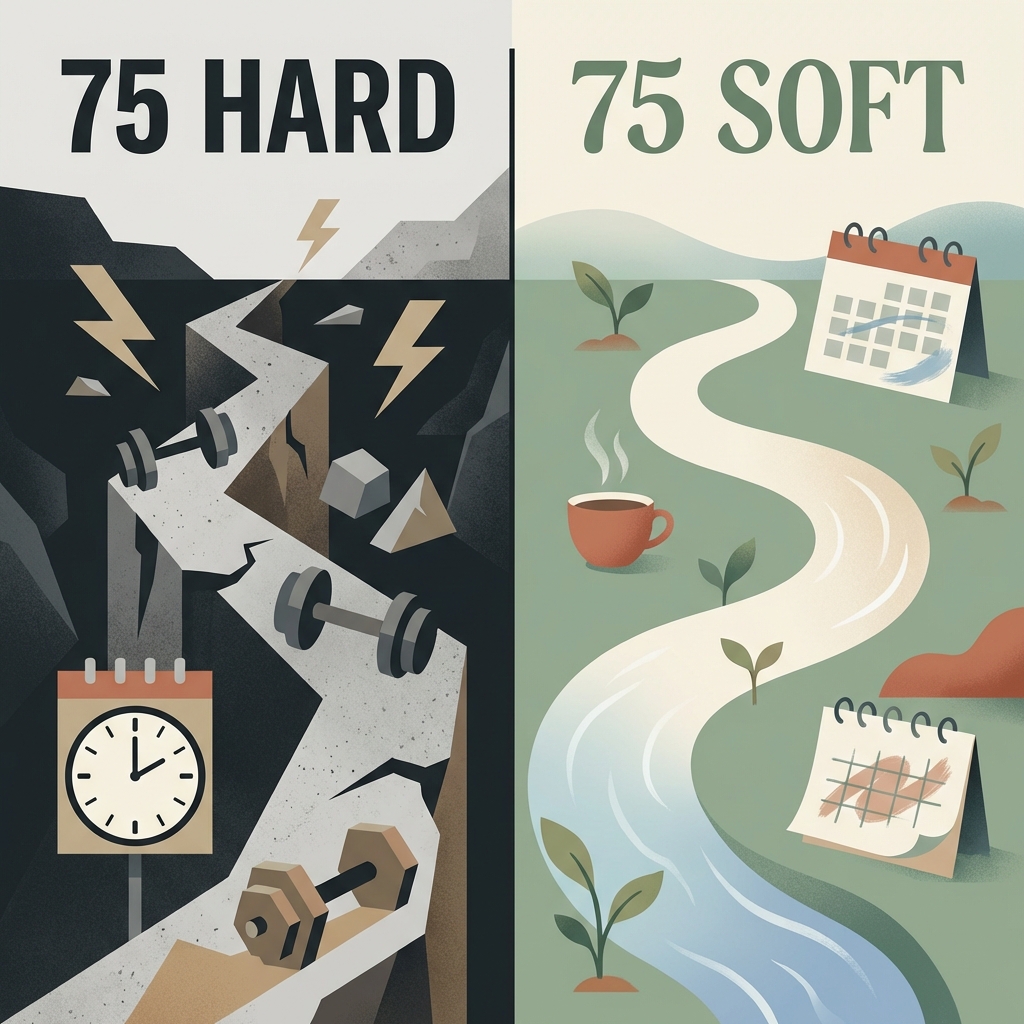
Let's start with the most common comparison. 75 Hard was created by entrepreneur Andy Frisella as a "mental toughness program." It's intentionally extreme—designed to be difficult, to push limits, to separate those who can from those who can't.
75 Soft emerged as a community-driven alternative for those who wanted the benefits of structured discipline without the rigid, often punishing rules of 75 Hard.
| Feature | 75 Soft | 75 Hard |
|---|---|---|
| Duration | 75 days | 75 days |
| Daily workouts | 1 (45 min) | 2 (45 min each) |
| Outdoor workout required | No | Yes |
| Strict diet | No | Yes |
| No alcohol | 1 per week allowed | Zero tolerance |
| Water intake | 3 liters | 1 gallon (3.78L) |
| Reading | 10 pages | 10 pages (non-fiction only) |
| Progress photos | No | Yes |
| Restart if you miss a day | No | Yes |
| Mental health friendly | Yes | Can be triggering |
The Philosophical Difference
75 Hard is built on the premise that mental toughness comes from pushing through discomfort with zero compromise. Miss one element? Start over. No exceptions, no excuses. For some people, this creates exactly the structure they need.
75 Soft is built on the premise that sustainable habits matter more than perfect days. It acknowledges that life happens—you might get sick, have a family emergency, or simply need grace. Progress is cumulative, not erased by imperfection.
Neither approach is inherently better. 75 Hard is right for some people at some times; 75 Soft is right for others. Know yourself.
What About 75 Medium?
Some people find 75 Soft too flexible and 75 Hard too extreme. Enter 75 Medium—an unofficial middle ground that varies in definition but generally includes:
- One 45-minute workout daily (like 75 Soft)
- Stricter nutrition approach (closer to 90/10)
- No alcohol (like 75 Hard)
- 10 pages of reading daily
- 3 liters of water
- Optional progress photos
- No restart rule (like 75 Soft)
75 Medium appeals to people who want more structure than 75 Soft provides but find 75 Hard's requirements unsustainable or unhealthy for their situation.
Common Custom Variations
The beauty of the 75-day format is its adaptability. Here are variations people have created for specific life circumstances:
The Beginner's 75
- 30 minutes of movement (walking absolutely counts)
- 5 pages of reading
- 2 liters of water
- One vegetable or fruit with each meal
- No restart rule
The Parent's 75
- Movement can be split throughout day
- Audiobooks count as reading
- Standard water goal
- Flexible meal timing and content
- Active play with kids counts as exercise
The Chronic Illness 75
- Movement based on daily capacity (some days might be 10 minutes)
- Hydration goals adjusted to medical guidance
- Rest days taken as needed without guilt
- Focus on mental wellbeing alongside physical
The Mental Health First 75
- Standard physical rules
- Added: daily 5-10 minute meditation
- Added: daily gratitude practice
- Journaling encouraged
- One complete rest day per week with no guilt
Creating Your Own Variation
If standard versions don't fit your life, create your own. The key elements that should remain: daily intentional movement, nourishing your body, reading or learning, and hydration. The specifics can flex to match your reality.
Seasonal Modifications
Some people modify based on seasons or life circumstances:
Summer 75
More outdoor activities encouraged, higher water intake for heat, emphasis on active recreation.
Winter 75
Indoor workout alternatives, cozy reading time, acknowledgment that darker months affect energy and mood.
Holiday 75
Extra flexibility around food traditions, maintaining movement even when visiting family, no guilt around cultural celebrations.
How to Choose What's Right for You
Here are questions to guide your decision:
What's your current fitness level?
If you're just starting out, 75 Soft or a beginner variation makes sense. If you're already active, you might want more challenge.
What's your relationship with discipline?
If you thrive under strict rules, 75 Hard might work. If rigid rules trigger anxiety or disordered patterns, 75 Soft is likely healthier.
What are your life circumstances?
Parents of young children, those with demanding jobs, caregivers, and people managing health conditions often need the flexibility of 75 Soft.
What's your goal?
If it's sustainable habit building, 75 Soft. If it's specifically testing your mental resilience, 75 Hard was designed for that.
There's No Wrong Choice
You can always start with 75 Soft and move to something more challenging later. You can always modify mid-challenge if something isn't working. This is about your growth, not about proving anything to anyone.
Ready to start? Review the core 75 Soft rules, check the safety considerations, and then begin your journey with the variation that fits your life. You can also explore apps and technology tools to track your progress, or see what the 75 Soft community is saying on social media.
Explore Variations & Comparisons
75 Soft vs 75 Hard: Which Is Better for You?
Comprehensive comparison of rule differences, health implications, and who each is for.
Why 75 Days Hits the Habit Sweet Spot
The science behind optimal challenge duration and lasting behavior change.

75 Medium and Other "Soft" Variations
Navigating the landscape of 75-day challenges to find your perfect fit.

75 Soft for Fat Loss, Muscle Gain, or Mental Reset
How to customize the challenge framework for your specific objectives.

Adapting 75 Soft for Specific Groups
Practical adaptations for students, shift workers, and frequent travelers.